Across time

A history that illuminates
the way we accompany.

A motor car can carry someone from one point to another. Only service gives the journey its character.
01Before the motor car

Service came before the machine.

Long before motor cars transformed the streets, distinguished households entrusted their journeys to a coachman. He knew the horses, maintained the carriage, mastered the routes and respected the customs of the family he served. Driving already belonged to something larger: presentation, punctuality and a particular way of welcoming.

The chauffeur de maître inherited this domestic culture, where trust mattered as much as skill. He was not a passing contractor, but a familiar presence entrusted with schedules, habits and sometimes conversations that would never leave the vehicle.
0217th–19th centuries

From heat to movement.

The French word chauffeur comes from the verb chauffer, meaning to heat. From the seventeenth century it referred to the person tending a forge fire. In the nineteenth century, with steam engines and railways, the driver fed the boiler while the engineer controlled the machine.

When the first motor vehicles appeared, the vocabulary followed the technology: by 1896, chauffeur was recorded in French as the driver of a motor vehicle. The origin recalls that driving required mastery of demanding machinery — starting it, monitoring it and knowing how to intervene.

031890–1914

The motor car enters the great houses.

During the Belle Époque, the motor car remained rare, costly and difficult to operate. Wealthy families, industrialists, aristocrats and public figures employed a professional able both to drive and maintain it. The personal chauffeur thus became part of the household organisation.

The working day did not begin when the passenger appeared. The driver prepared the car, checked its operation, studied the route and waited as long as necessary. Uniform, restraint and opening the door gave visible form to a deeper quality: attention to the person being carried.

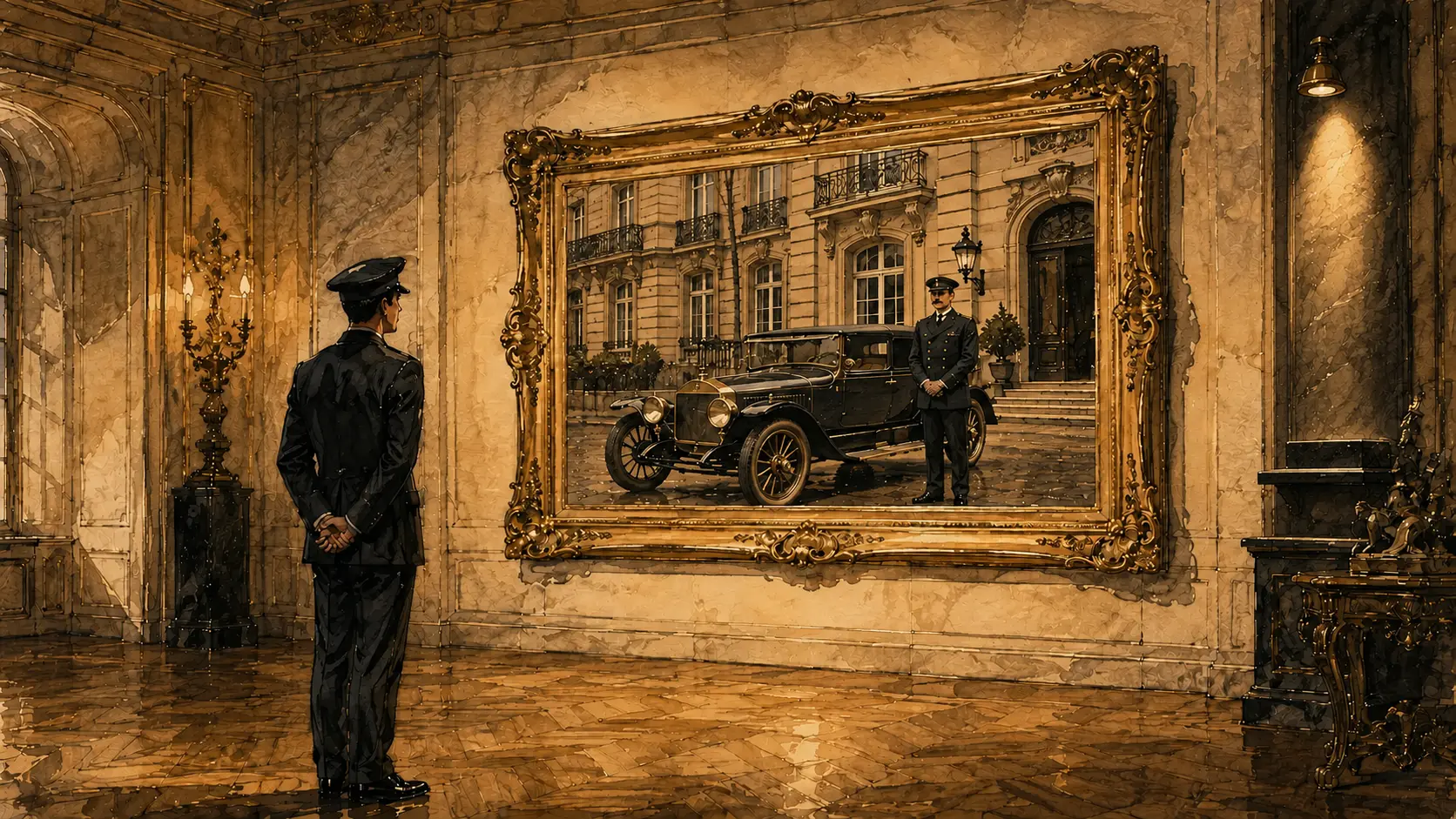
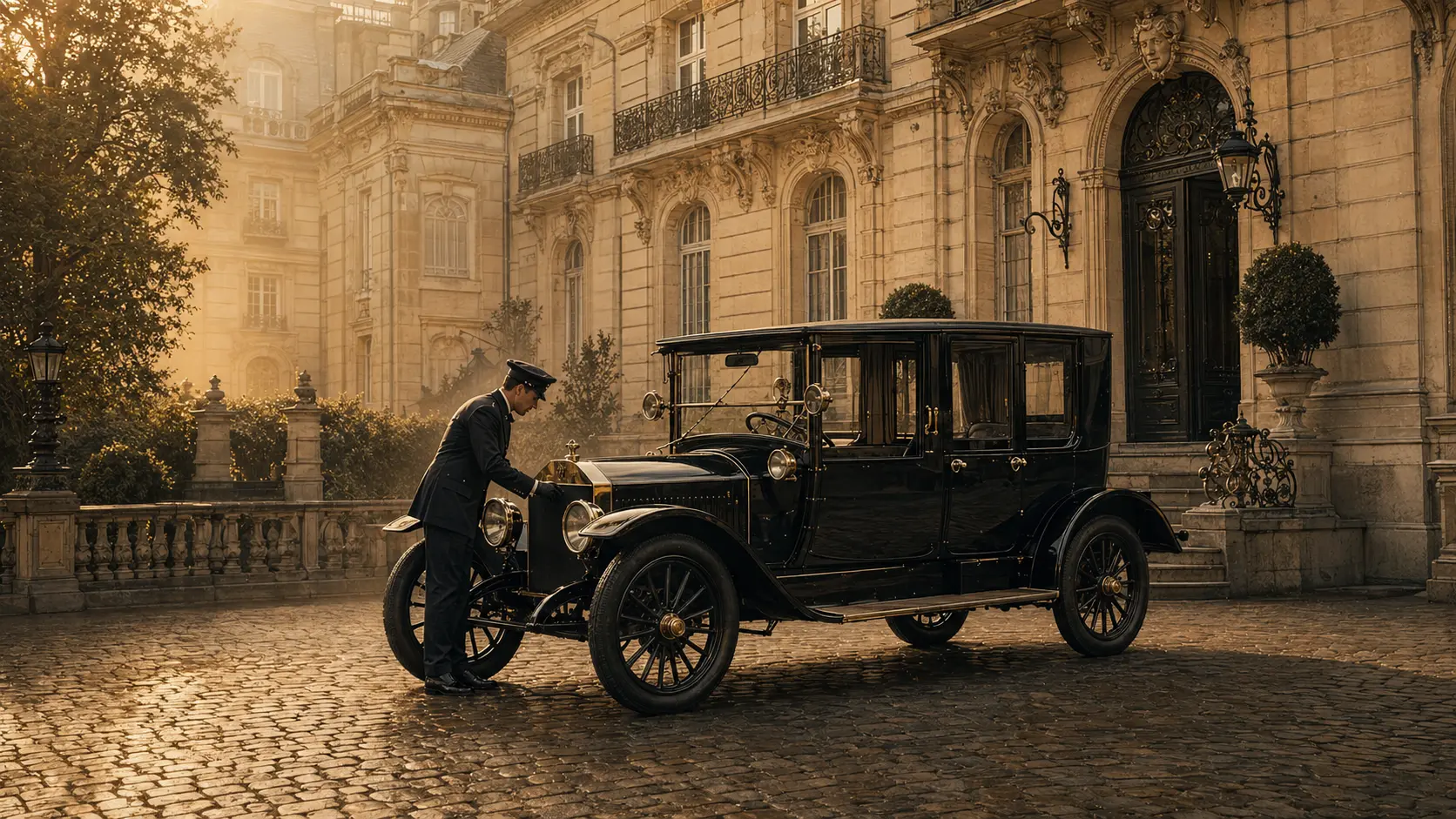
Chauffeur de maître preparing an early motor car in a Parisian private courtyard

1905 · Before the arrival

The car is prepared before the house awakens.

In the still-silent courtyard, the driver checks the motor car and anticipates the day’s first departure.

04Between the wars

A position of trust.

Motor cars became more widespread, roads improved and driving grew less mysterious. Yet in houses retaining a dedicated driver, the profession lost none of its depth. The driver had to know Paris, its hotels, theatres, administrations, schedules and social or professional customs.

He might be required at any hour, accompany several generations of the same family and adapt his presence to the occasion. He knew how to speak with restraint and, above all, how to remain silent. Confidentiality became an unspoken rule, inseparable from the trust placed in him.

05After 1945

Driving becomes widespread; service remains.

After the Second World War, private car ownership expanded and more people drove themselves. The chauffeur de maître became less common, while executive chauffeurs, company drivers, corporate cars and professional passenger services developed.

The essence nevertheless survived: preparing rather than improvising, accompanying rather than merely transporting, maintaining an impeccable vehicle and treating punctuality as a mark of respect. This continuity still distinguishes the driver in the noblest sense of the word.

06Ancien Régime–21st century

From petite remise to grande remise.

The expressions petite remise and grande remise belong to the long history of private passenger transport in France. Under the Ancien Régime they evoked the carriage houses where vehicles and coachmen waited in the service of the king and court. Much later, the terms became distinct professional categories for chauffeured cars available only by prior order, without soliciting passengers on public roads.

Petite remise described a pre-booked transport service, while grande remise referred to luxury tourism transport using recent, comfortable vehicles driven by a professional driver holding a prefectural certificate. Before the French voiture de tourisme avec chauffeur status was created in 2009, what is now associated with premium VTC activity belonged to grande remise. The expression grande remise chauffeur recalls this heritage, although it is no longer a current professional status.

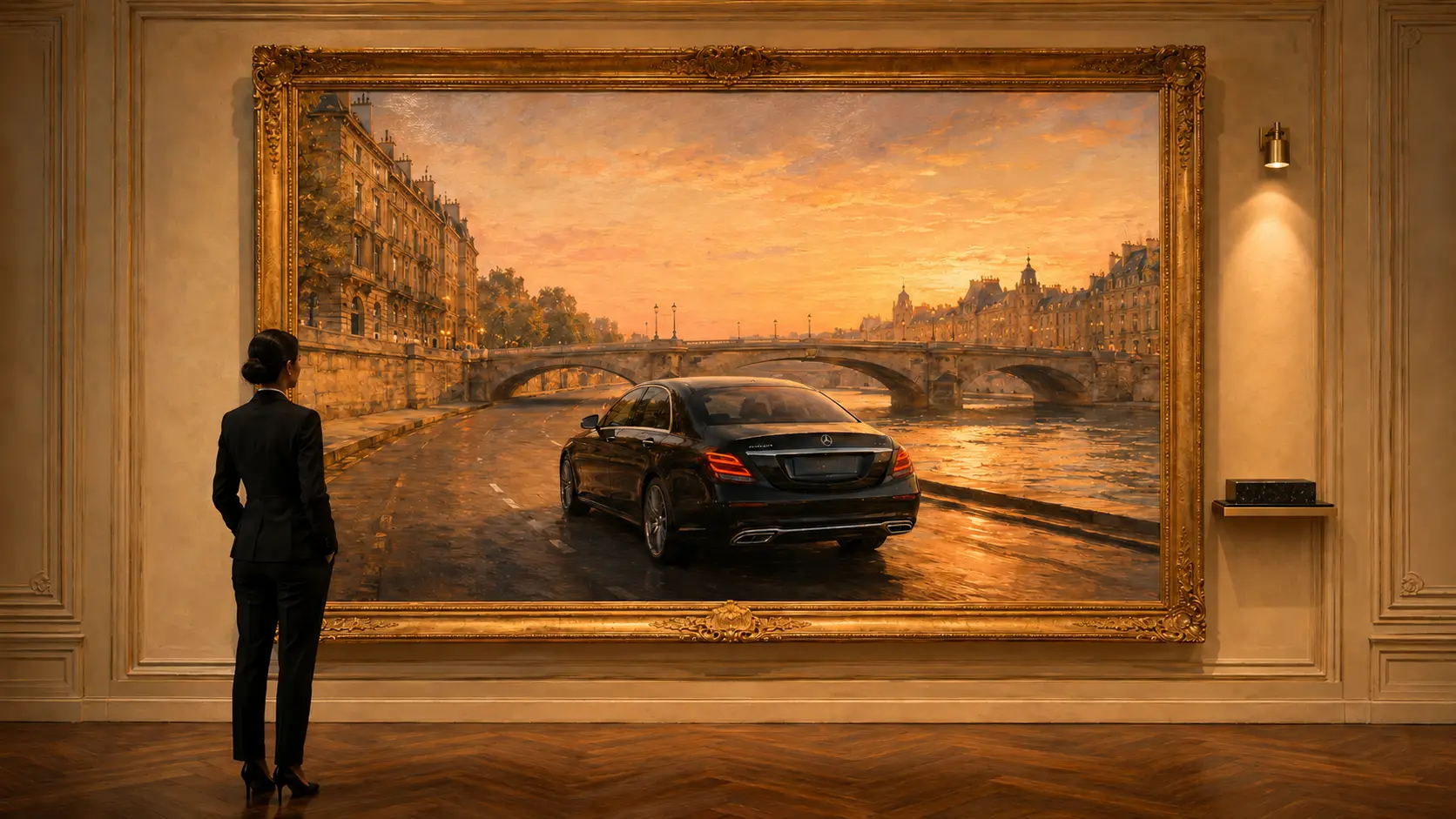
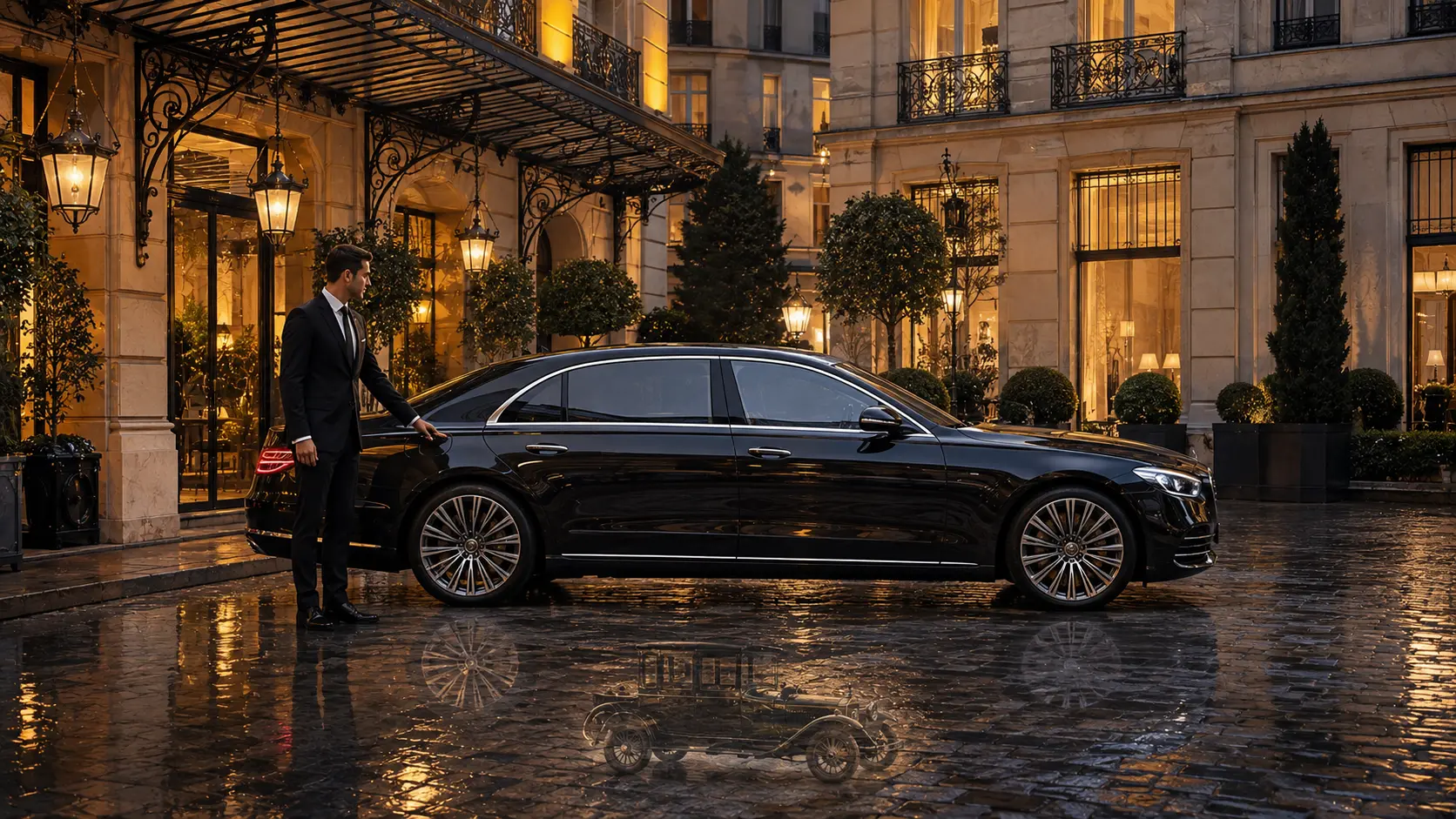
Heritage of the chauffeur de maître continued by a contemporary private chauffeur in Paris

Today · Continuity

The gesture remains; the era changes.

The silhouette of the early motor car still seems reflected in the stones: technology evolves, while preparation and measured presence endure.

07Before modern VTC services

Passenger transport becomes regulated.

France’s regulated public road passenger transport activity emerged through this evolution, distinct from the driver employed by a household. The professional competence certificate for vehicles carrying no more than nine people, driver included, demonstrated the knowledge required to organise and operate passenger transport on behalf of others.

Our own professional path includes this stage. Long before app-based VTC services expanded, we obtained this competence through examination and worked in passenger transport. A professional VTC licence later placed that experience within today’s regulatory framework. It contributes practical knowledge of safety, mission planning and the responsibility owed to every passenger.

08Today

The private chauffeur, a contemporary heir.

The tools have changed: live navigation, timetable monitoring, discreet communication and precise coordination of collections. Modern technology improves anticipation, but replaces neither judgement, courtesy nor an intelligent reading of the situation.

The contemporary private chauffeur does not imitate the past. He retains its sense of measure: a recognisable presence without display, smooth driving, a door opened at the right moment and the freedom for passengers to speak, work or remain silent. A vehicle transports; a professional driver accompanies.

From chauffeur de maître to private chauffeur

A living heritage.

The history of the chauffeur de maître is more than an old ceremony. It inspires our vision of a private chauffeur in Paris and a luxury private chauffeur in Paris: keeping one’s word, respecting time, exercising restraint and allowing every passenger to travel according to personal preferences.

Questions fréquentes

Understanding this heritage.

The chapters

Continue the story.

Each artwork opens a new page in our universe. Scroll to choose the next part of the journey.

Private Chauffeur Paris — Our universeIThe SignatureOur universeDiscover Private Chauffeur Paris — The chauffeur’s heritageIIThe HeritageThe chauffeur’s heritageDiscover Private Chauffeur Paris — Paris, a historyIIIThe MemoryParis, a historyDiscover Private Chauffeur Paris — Bespoke ParisIVThe Art of LivingBespoke ParisDiscover Private Chauffeur Paris — EventsVThe StageEventsDiscover Private Chauffeur Paris — Hotels & PalacesVIThe WelcomeHotels & PalacesDiscover Private Chauffeur Paris — CorporateVIITrustCorporateDiscover Private Chauffeur Paris — As-directed serviceVIIITimeAs-directed serviceDiscover Private Chauffeur Paris — AirportsIXDepartureAirportsDiscover Private Chauffeur Paris — Railway stationsXArrivalRailway stationsDiscover Private Chauffeur Paris — Long-distance travelXIThe HorizonLong-distance travelDiscover Private Chauffeur Paris — Our vehiclesXIIStyleOur vehiclesDiscover Private Chauffeur Paris — Our collection13 artworksOur collectionDiscover